
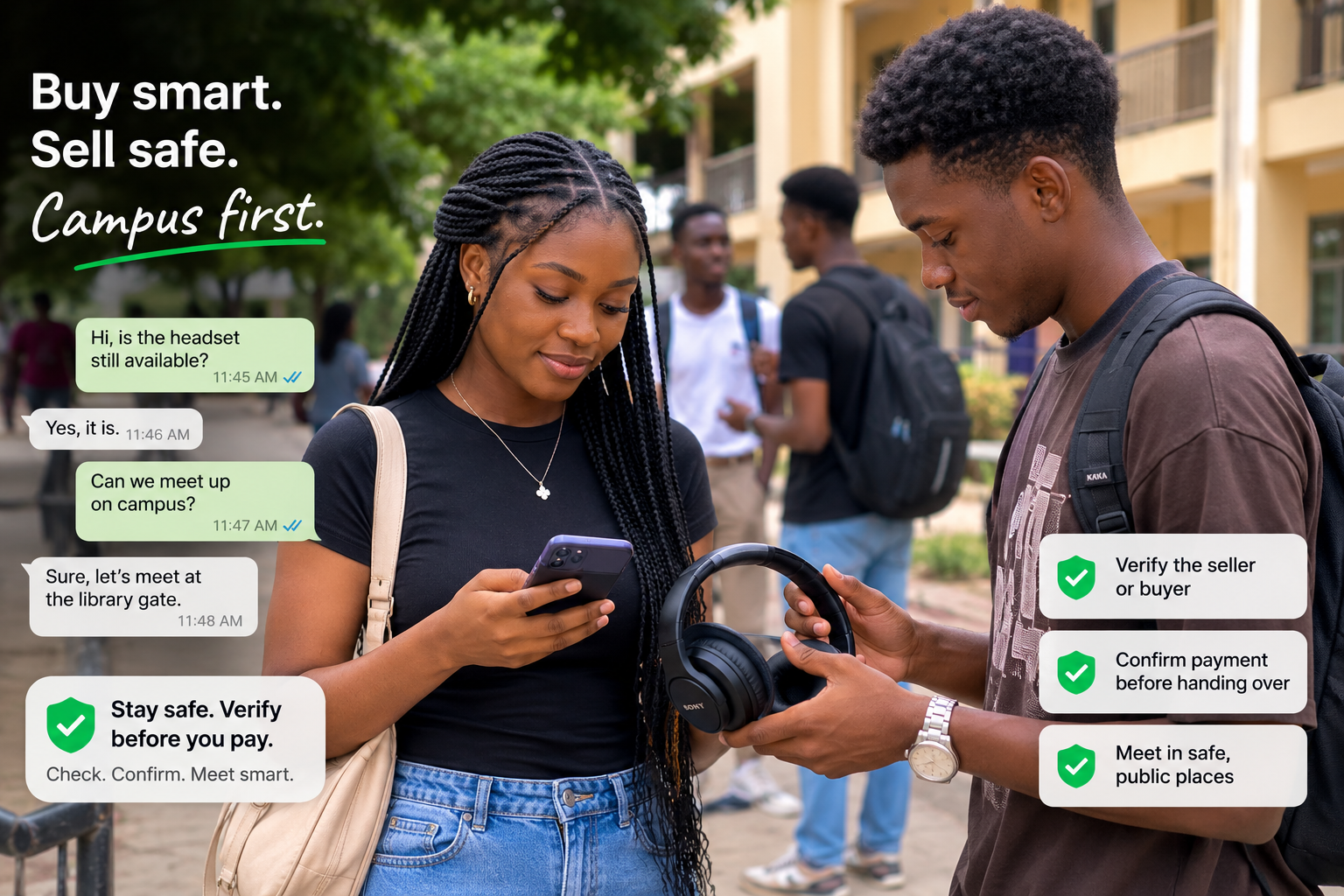
Why Buying and Selling on Campus Can Be Risky
Campus is basically its own small marketplace.
Students sell everything from phones and laptops to clothes, shoes, mini-fridges, textbooks, wigs, furniture and even hostel essentials. And because students are always looking for cheaper alternatives, buying second-hand items can be a smart way to save money.
The problem? Not every person advertising on WhatsApp Status is selling what they claim to have.
You could pay for an item that doesn't exist, receive something completely different from what was advertised, or hand over your own item to someone who disappears without paying.
This doesn't mean you should stop buying and selling on campus. It simply means you need to be more careful about who you're dealing with and how the transaction happens.
Common WhatsApp Status Scams Students Should Watch Out For
1. “Pay Before Delivery” Scams
You see a great deal on someone's Status. The seller says there are other interested buyers, so you need to pay immediately to secure it.
You transfer the money.
Then suddenly, their phone is switched off.
Or they start giving you excuses about delivery.
Before you know it, you've been blocked.
A genuine seller may request a deposit in some situations, but pressure to make an immediate payment should always make you pause and verify the transaction first.
2. Fake Payment Alerts
This one is especially important if you're the seller.
A buyer sends you a screenshot showing that they've transferred your money. They may even show a convincing bank alert.
Don't release your item based on a screenshot.
Check your own bank or payment app to confirm that the money has actually entered your account.
Screenshots can be edited or manipulated.
3. The “My Friend Will Pick It Up” Trick
Someone agrees to buy your item but says their friend, roommate or dispatch rider will collect it.
That isn't automatically a scam, but it creates another layer of risk.
If you're selling something valuable, make sure you've confirmed the payment before handing it over. If possible, record who collected the item and keep evidence of the transaction.
4. Prices That Are Too Good to Be True
A fairly new phone is being sold for dramatically less than what similar phones are going for.
A laptop that normally costs significantly more is suddenly available at an unbelievably low price.
Sometimes, it's genuinely a good deal.
Sometimes, the low price is being used to make you ignore obvious red flags.
Don't let the excitement of a bargain make you skip verification.
How to Buy and Sell on Campus More Safely
Verify Before You Pay
Before sending money, ask questions about the item.
If you're buying a used phone, for example, ask about:
- Its condition
- Any faults or repairs
- Battery condition
- Accessories included
- How long the seller has had it
- Why they're selling it
If possible, inspect the item physically before making payment.
For electronics, test the important features instead of assuming everything works because the seller says it does.
Don't Confuse Familiarity With Trust
This is where campus transactions can become tricky.
Someone might say:
“I'm in 300 level too.”
Or:
“I stay in the next hostel.”
That can make you feel safer, but being a fellow student doesn't automatically make someone trustworthy.
Verify the person and the transaction, not just their story.
Meet in a Safe, Public Place
If you're meeting someone you don't know well, avoid secluded locations.
Choose somewhere public and familiar on campus. If possible, let a friend know where you're going and who you're meeting.
You don't need to turn every transaction into a major operation. Just don't put yourself in an unnecessarily vulnerable situation to collect a ₦10,000 item.
Keep Your Receipts and Conversations
Don't immediately delete the chat after completing a transaction.
Keep:
- Payment receipts
- Screenshots of the original listing
- Relevant WhatsApp conversations
- Details about what was agreed
- Photos or videos of the item, where relevant
If something goes wrong later, having a record of the transaction is much better than trying to remember everything from memory.
If You're the One Selling an Item
Buyers aren't the only ones who need to be careful.
If you're selling your old phone, fan, textbook, clothes or hostel items, protect yourself too.
Don't hand over the item because someone says they've paid. Confirm the money yourself.
Also be careful about giving out unnecessary personal information. You don't need to share your home address or other sensitive details just because someone wants to buy your item.
For expensive items, consider meeting in a public location rather than inviting a stranger directly into your room or hostel.
A Safer Way to Buy and Sell on Campus
WhatsApp Status is convenient because almost everyone already uses it. But it wasn't really designed as a structured marketplace.
That means you're often relying on someone's profile, their word and whatever information they've chosen to put in a Status.
A dedicated campus marketplace can make the process easier to organise because buyers and sellers can find items in one place and have more context around the transaction.
This is one area where DexTask's Campus Market can fit naturally into student life: instead of relying entirely on random Status updates, students can use a platform designed around campus buying and selling.
Still, no platform should replace common sense. Always verify what you're buying, be careful with payments and use safe meeting practices.
Quick Checklist Before You Complete a Transaction
Before buying:
- Check the seller and their listing carefully.
- Ask questions about the item's condition.
- Inspect and test the item when possible.
- Don't allow pressure to rush your decision.
- Confirm who you're paying before transferring money.
- Keep records of the transaction.
Before selling:
- Don't accept screenshots as proof of payment.
- Confirm the money in your own account.
- Don't give out unnecessary personal information.
- Meet buyers somewhere reasonably safe.
- Keep evidence of the listing and conversation.
- Be cautious when someone introduces an unnecessary third party into the transaction.
Final Thoughts
Buying and selling used items is one of the easiest ways for students to save money and make money on campus. Your old textbook could be exactly what another fresher needs. That mini-fridge you're no longer using could help another student moving into a hostel.
The goal isn't to become paranoid about every buyer or seller.
It's simply to slow down, verify and make the transaction as safe as possible.
A good deal is only a good deal if you actually receive what you paid for—or get paid for what you sold.
Ready to make campus transactions easier? Explore DexTask's Campus Market and find a more organised way to buy and sell with fellow students.
Written by
Blessing Ajayi · DexTask
Publisher: DexTask
Published on the DexTask blog covering campus mobility, student infrastructure, and product updates across Nigeria and Africa.
Related posts
Buying Fairly Used Gadgets on Campus: A Checklist
A fairly used gadget can save you money, but a bad deal can leave you with an expensive problem. Use this simple checklist before buying a phone, laptop or other gadget on campus.
Why Verified Student Communities Are Safer for Trading
Trading with fellow students can be convenient, but how do you know who you're dealing with? Here's why verified student communities can make buying and selling on campus safer.
How to Spot and Avoid Fake Off-Campus House Agents
Looking for a house outside campus? Learn how to identify fake agents, verify property listings, avoid suspicious payments and make safer accommodation decisions.